
Running a small business can be rewarding, but it can also come with significant financial risk. When a business faces mounting debt, declining revenue, lawsuits, or creditor pressure, bankruptcy may provide an opportunity to restructure the business and continue operating.
For many eligible small businesses, Subchapter V of Chapter 11 has become an increasingly attractive option. Subchapter V was created specifically to make Chapter 11 more accessible and practical for small businesses.
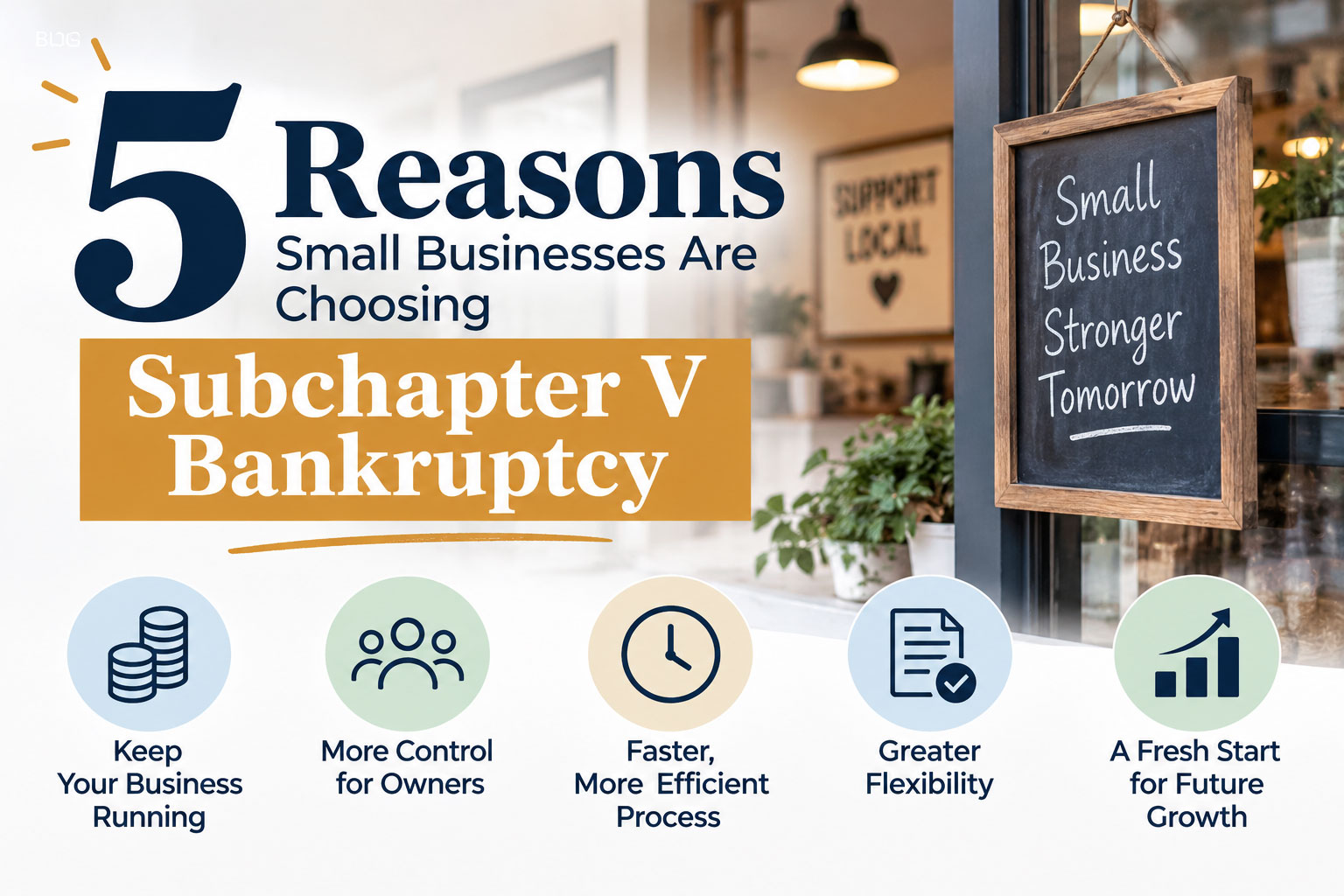
Here are five reasons small businesses are choosing Subchapter V bankruptcy.
1. The Business Can Continue Operating
One of the biggest advantages of Subchapter V is that filing for bankruptcy does not necessarily mean closing the business. The business can generally continue operating as a debtor in possession while it develops a plan to address its debts.
This can allow an otherwise viable business to restructure its obligations while continuing to generate revenue.
2. The Business Owner Can Generally Remain in Control
In a traditional Chapter 11 case, the involvement of a business owner can sometimes become complicated by creditor and trustee concerns.
Subchapter V is designed to allow the existing owner to remain involved in operating the business. In many cases, the owner can retain an ownership interest while the company reorganizes.
This can be particularly important for small businesses where the owner’s personal involvement is essential to the company’s success.
3. Confirmation Can Be More Straightforward
Subchapter V eliminates some of the procedural and financial burdens associated with traditional Chapter 11.
For example, a Subchapter V debtor generally does not have to file a separate disclosure statement before soliciting votes on a plan. The case also has a more streamlined process and shorter deadlines designed to move the reorganization forward more efficiently.
4. A Plan Can Be Confirmed Without Every Creditor’s Approval
One of the most important features of Subchapter V is its ability to facilitate confirmation of a plan even when creditors do not agree to the plan.
Under certain circumstances, a court can confirm a Subchapter V plan over the objection of a dissenting class of creditors. This can provide a small business with an opportunity to restructure debt despite opposition from one or more creditors.
The Bankruptcy Code also provides special rules governing how certain debts are paid through the plan.
5. It Can Provide a Path to a Fresh Start
The ultimate goal of a successful Subchapter V case is to allow a viable business to emerge from bankruptcy with a manageable debt structure.
Instead of liquidating the company’s assets and shutting down, a business may be able to use bankruptcy to address overwhelming debt while preserving its employees, customers, contracts, and ongoing operations.
Is Subchapter V Right for Your Business?
Subchapter V is not appropriate for every business. Eligibility requirements apply, including limitations concerning the amount and nature of the debtor’s debts. The business must also have a realistic path toward reorganization.
For a small business that has a viable operation but has become overwhelmed by debt, however, Subchapter V can provide tools that may not be available outside of bankruptcy.
If your Massachusetts business is struggling with creditor pressure, lawsuits, loans, tax obligations, or other debt, it may be worthwhile to discuss your options with an experienced bankruptcy attorney before the situation becomes unmanageable.
Lipton Law Group, LLC represents Massachusetts small businesses and business owners in bankruptcy and debt-restructuring matters. Contact our office to discuss whether Subchapter V or another form of bankruptcy relief may be appropriate for your business.